Is The Land Guilty, Or Are We?

Plantations and the never-ending question of the legacy of slavery in the United States are trending again. The destruction by fire of the largest antebellum plantation home in the South and the reintroduction of a reparations bill in Congress seem ironically linked.
Both seem tied by a fiery political narrative and an actual fire.
Slavery in American history is a very complex issue. It is far more complicated than people realize or are willing to admit. Before I continue, let me say this: Slavery won't be solved or atoned for by burning down plantations, putting forth reparation bills, or holding roundtable discussions.
The most recent reparations bill reintroduced by Democratic Congresswoman Summer Lee calls for an expenditure of 14 trillion dollars, almost three times the federal budget back in 2023.
Here's my quick take on reparations: I believe the ship for reparations for blacks sailed at the start of Reconstruction when the 40 acres and a mule initiative failed. No one alive today or even 50 years ago is responsible for slavery or was enslaved. Also, I believe that pushing something like this will divide the country further. You're also asking the government to determine a price for human suffering.
Think about that last line for a second. How much would be enough?
Some mourn the loss of Nottoway Plantation as an economic blow to the area, while others argue that weddings and other events shouldn't have been held there at all.
I see where they're coming from. But here's another truth: a house is not a person. It has no soul, no memory, no will. It's a vessel—sometimes beautiful, sometimes broken—used by flawed humans.
Was slavery the only injustice that happened on these properties? What about sharecropping, prison labor, domestic abuse, and even murder? Do we only assign moral weight to a structure if the story fits the narrative we're trying to tell?
Every historic plantation home I've visited discusses slavery in the tours, displays, and artifacts, and they could hold weddings.
The past matters—but when we make buildings into idols or symbols of inherited guilt, we risk oversimplifying history and obscuring the fundamental question: what kind of people are we becoming today?
There's a plantation home outside of Jacksonville, Florida called Kingsley Plantation. It's a long story, but I'll simplify it as much as possible.
Spanish Florida did slavery differently from the United States. Under Spanish law, slavery was not always seen as a permanent condition. Enslaved people could work to earn their freedom, marry, and even own property, including land, as long as they converted to Catholicism.
Zephaniah Kingsley, a British merchant, bought an enslaved teenage girl from Senegal named Anna Jai in the early 1800s. Eventually, he married her according to her native African customs (which included polygamy) and freed her. The Spanish government approved a land grant near the plantation, and Zephaniah gave her 12 enslaved people to work it. Anna Kingsley often managed her own property and Kingsley Plantation along with her three mulatto children who Zephaniah proudly displayed and acknowledged to guests.
After Florida became a U.S. territory, Anna Kingsley became locked in a legal inheritance battle for the property and won.
I share this wild story not to defend slavery but to demonstrate that the link between property, history, and human nature is not black and white!
There were black enslavers who participated in it for profit, just like their white counterparts. There were free blacks who didn't support the abolition of slavery. The history of Liberia is a whole other rabbit hole we could go down.
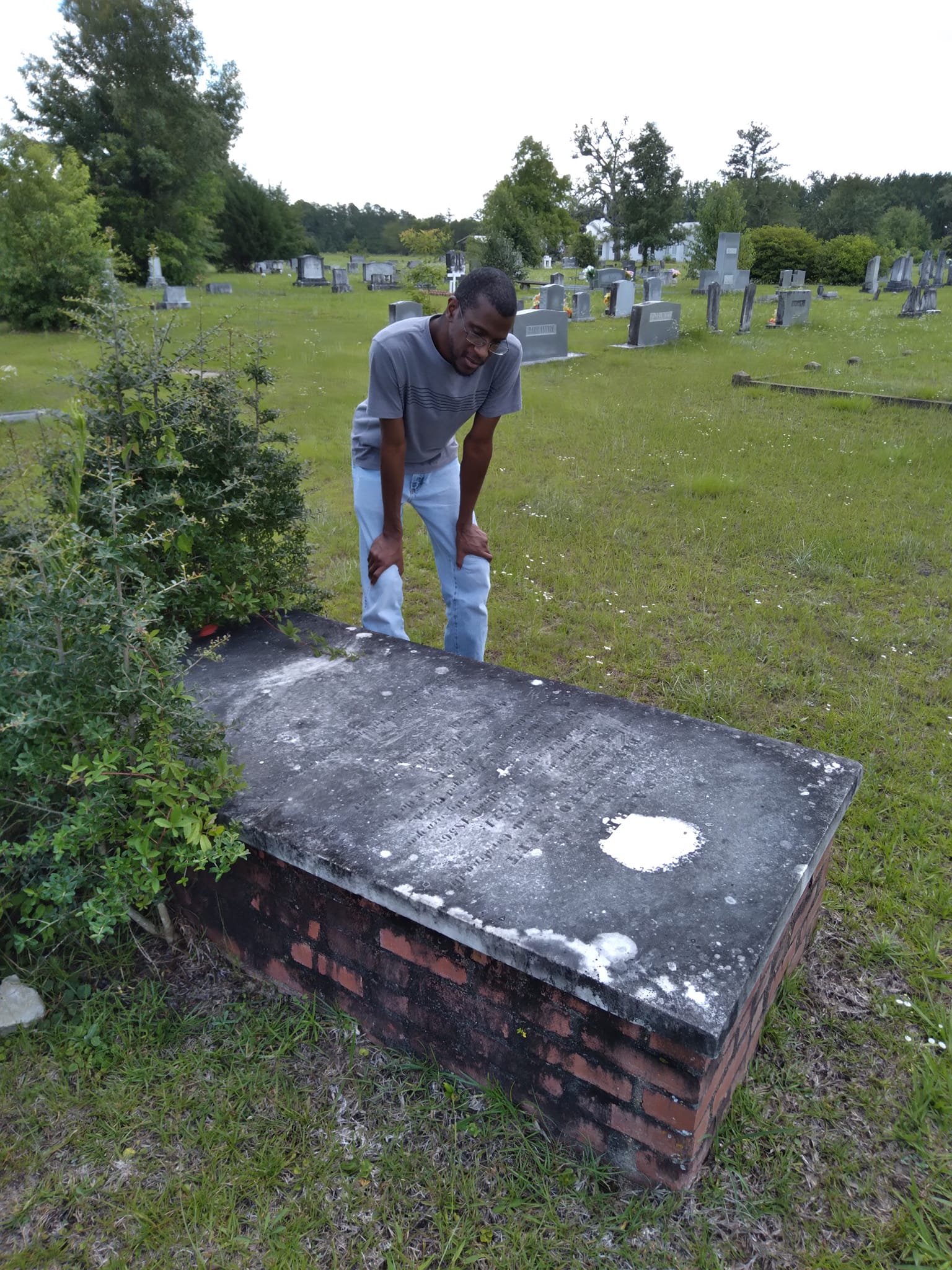
Even in my genealogy, I encountered some uncomfortable truths. A couple of years ago, I found the gravesite of a man who may have owned at least one of my ancestors. He was a Methodist minister—a man of God.
Where does this leave us with the question of reparations, the legacy of slavery, and the Nottoway Plantation fire?
When do we say enough is enough? Do we think that by asking to be paid off by reparations or separated into so-called "safe spaces for people of color" (which, ironically, echo the very racial segregation we claim to have left behind), or wanting more context about slavery in historic plantation homes, if not just destroying them, will make everything better?
Or do we want Americans, particularly "white" Americans, in this cycle of guilt that we expect them to inherit from their ancestors?
How long do we let the fire burn?
No matter how angry we are about things outside of our control, every single person has to come down to a choice of personal responsibility. It's ok to be angry and frustrated. However, we must recognize that people are flawed and look for solutions in forgiveness, reconciliation, and progress. Booker T. Washington and many others, black and white, pushed for that.
Let's stop feeding the flames—and start rebuilding something better.
Do you think reconciliation for the darker parts of history can be found in payments, monuments, or something else entirely? Reply to this email or let me know in the comments!
Thanks for reading The Freeman Wire! Feel free to share this post if you enjoyed it!


Member discussion