Why Gun Bans Don't Stop Crime: The Self-Defense Reality

Gun bans don't stop criminals.
A few years ago, a relative took me out to a local shooting range for the day to try shooting. He taught the basics such as safety, proper holding, targeting etc. I got to shoot a 9mm, an AR-22, a small pistol he called a "Get off me" gun. And the infamous AR-15.
The gun the many politicians tried to label an assault weapon and have it banned or highly regulated.
He had a lot of accessories on it that made it heavy and I could just barely lift it. But after the first couple of shots, I realized something.
This was a powerful gun. And it absolutely should not be banned.
After trying all of them, I decided that the AR-22 was my favorite!
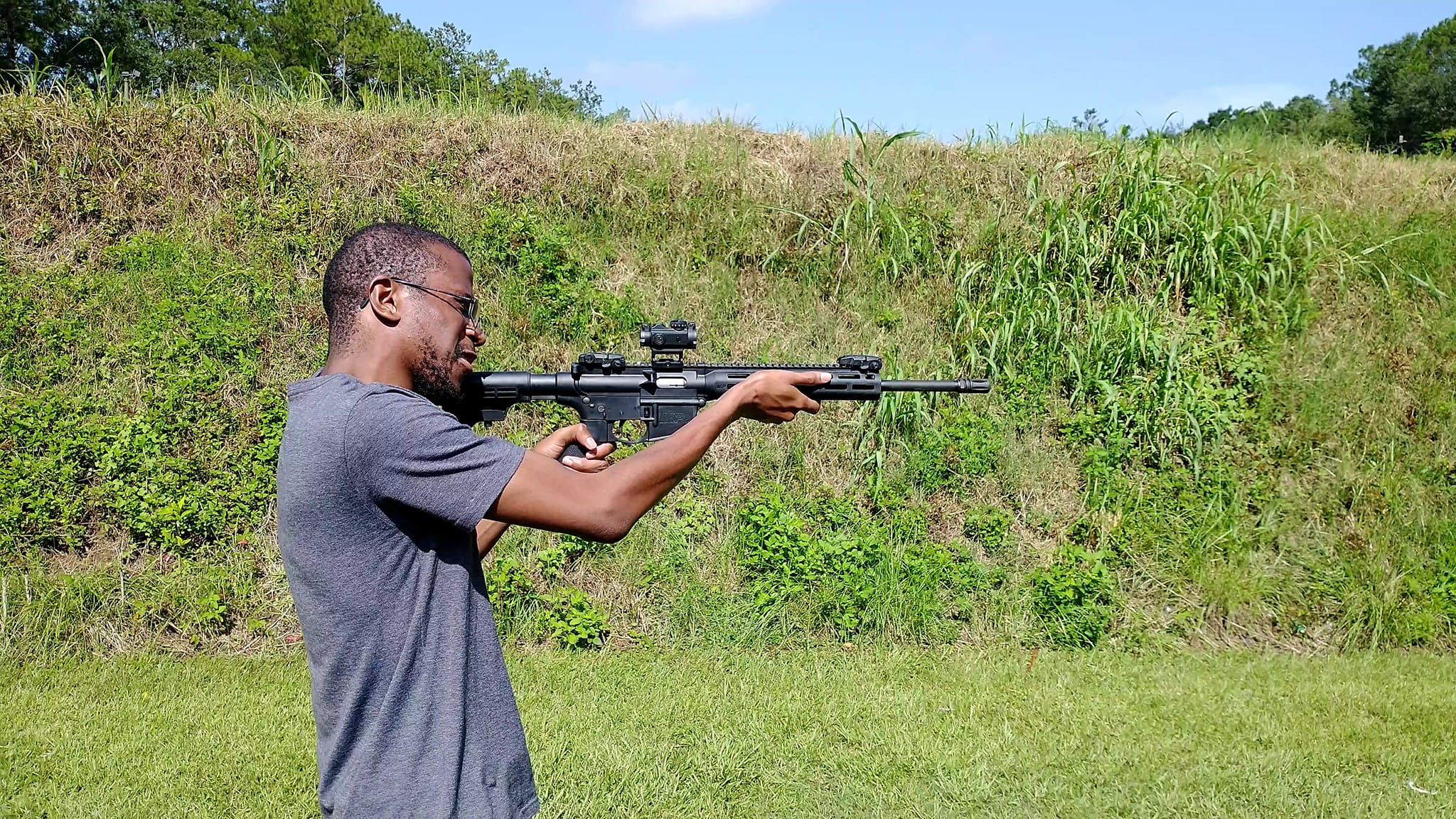
But I'd definitely shoot the AR-15 again.
That day at the range came back to me recently when Virginia Governor Abigail Spanberger signed an assault weapons ban on May 14, 2026. The law takes effect July 1 and prohibits future sales, manufacture, import, purchase, or transfer of certain semi-automatic firearms, those with features like pistol grips, along with magazines over 15 rounds. Existing owners are grandfathered in, but gun-rights groups have already filed lawsuits.
My experience shooting that AR-15 reminded me something important: true liberty includes the right to effective self-defense.
History shows us that when governments try to disarm their citizens, resistance follows. Because individuals, not government, bear the primary responsibility for personal safety.
When Disarmament Sparked a Revolution
The American Revolution didn't start with a tax on tea. It started with an attempt to confiscate guns and gunpowder.
In 1774 and 1775, the British Crown banned arms imports, raided gunpowder stores, and seized military supplies across the colonies. The colonists understood what was happening. An unarmed population couldn't resist tyranny.
The Brown Bess and Charleville Musket were considered military-grade weapons. Yes, really.
On April 19, 1775, British General Thomas Gage sent 700 soldiers to Concord, Massachusetts with clear orders: seize the weapons and gunpowder stored by the colonial militia.
The colonists had been warned. When British troops reached Lexington Green at dawn, they found about 70 militiamen waiting. The British commander ordered the Americans to disperse and lay down their arms.
Someone fired a shot. We still don't know who.
That single shot, "heard round the world," started the Revolutionary War. On their retreat to Boston, colonial militiamen fired from behind trees, stone walls, and buildings. The British suffered nearly 300 casualties.
The Founders never forgot this lesson. When they wrote the Second Amendment, they weren't thinking about hunting or sport shooting. They were thinking about Lexington and Concord. They were thinking about a government that feared its own people enough to try disarming them.
"A well regulated Militia, being necessary to the security of a free State, the right of the people to keep and bear Arms, shall not be infringed."
This wasn't about muskets. It was about power. The power to resist tyranny. The power to defend yourself, your family, your community. The natural right of self-defense that exists before any government and beyond any government's authority to eliminate.
What the Constitution Actually Protects
The Second Amendment protects an individual right to keep and bear arms for self-defense. Not a collective right. Not a right limited to militia service.
The Supreme Court confirmed this in District of Columbia v. Heller in 2008. Justice Antonin Scalia wrote that the Second Amendment "surely elevates above all other interests the right of law-abiding, responsible citizens to use arms in defense of hearth and home."
In 2022, the Court went further in New York State Rifle & Pistol Association v. Bruen, striking down New York's restrictive concealed carry scheme and establishing that gun regulations must be consistent with the nation's historical tradition of firearm regulation.
These rulings matter because they reject the idea that the Second Amendment only protects muskets or "sporting purposes." The right extends to weapons "in common use" for lawful purposes, especially self-defense.
And here's what gun control advocates don't want to talk about: armed citizens stop crimes. A lot of crimes.
Estimates of defensive gun uses vary widely, but even conservative estimates put the number at around 60,000 to 80,000 annually. Other studies suggest several hundred thousand. The CDC has noted that defensive uses of guns are at least as common as criminal uses. Most don't involve firing a shot. The presence of a firearm is often enough to stop an attack.
When Virginia bans commonly owned firearms based on cosmetic features, it crosses a constitutional line. The broader problem: when government limits effective tools for self-defense, it implicitly demands that citizens rely on state protection instead.
That's a problem.
Why?
Because that protection is often slow or absent. Police response times in many areas average 10 to 15 minutes or more.
The state can't be everywhere. It can't protect everyone. So when government restricts your ability to protect yourself while offering no guarantee of protection in return, what does that leave you with? Vulnerability dressed up as public safety.
The Natural Right of Self-Defense
Self-defense isn't a right granted by government. It's a natural right that exists before any government.
John Locke understood this in the 17th century. In his Second Treatise of Government, he argued that individuals have the right to defend their lives, liberty, and property. When people form governments, they don't surrender this right. They create institutions to help protect it.
Assault weapons bans don't disarm criminals. Criminals ignore laws. They'll obtain weapons through illegal channels, just as they obtain drugs despite decades of prohibition. Meanwhile, law-abiding citizens who would have purchased an AR-15 for home defense are left with fewer options.
The result is a transfer of power from responsible citizens to both criminals and the state. Neither should be trusted with a monopoly on effective force.
Taking Responsibility for Your Own Safety
Self-defense starts with mindset, not equipment.
Jeff Cooper, the firearms instructor who developed the "modern technique" of handgun shooting, created a color-coded system of awareness:
Condition White: Unaware and unprepared. Absorbed in your phone, oblivious to surroundings. This is where you're most vulnerable.
Condition Yellow: Relaxed alertness. Aware of surroundings, noting people and exits. Not paranoid, just attentive. This is where you should spend most of your time in public.
Condition Orange: Specific alert. You've identified a potential threat and are evaluating it.
Condition Red: Fight or flight. The threat is immediate and you're taking action.
Developing this awareness costs nothing. It's simply a habit of paying attention. Trust your instincts. If something feels wrong, leave the area.
Art of Manliness has a great article about developing situational awareness
For those who want tools beyond awareness, several options exist. Always check local and state laws.
Pepper spray or gel is legal for self-defense in most jurisdictions with some restrictions. Carry it where you can access it quickly.
Byrna launchers use CO2 cartridges to fire pepper balls or kinetic projectiles. They offer range and stopping power without being classified as firearms in most states.
Self-defense keychains, personal alarms, and tactical flashlights can all be effective deterrents.
Stun guns and tasers have varying legal status. Research current laws before purchasing.
Physical skills matter as much as tools.
Krav Maga is a reality-based system developed by the Israeli military. It focuses on real-world scenarios and using your body's natural reactions.
Brazilian Jiu-Jitsu teaches ground fighting and control. The training builds confidence and calm under pressure.
For those who choose the firearms route and are legally eligible: get trained by a qualified instructor, practice regularly, store securely, and comply with all laws. Understand your state's self-defense laws. Responsible gun ownership includes ongoing education and practice.
The most effective approach is layered defense. Awareness helps you avoid dangerous situations. De-escalation skills can defuse confrontations before they turn physical. Physical training gives you options if avoidance fails. Tools, whether pepper spray or firearms, provide additional options when all else fails.
Self-reliance doesn't mean isolation. It means taking primary responsibility for your own safety while being part of a community that looks out for one another. It means not waiting for someone else to save you.
That's what strengthens liberty. Not dependence on the state, but capable individuals who can protect themselves and help protect others.
Be empowered and armed
History, the Constitution, and daily reality all point in the same direction. Toward empowered individuals, not disarmed subjects.
Every person who takes responsibility for their own safety, who learns to shoot or practices martial arts or simply pays attention to their surroundings, carries forward that spirit.
Exercise your rights responsibly. Support legal challenges to unconstitutional overreach. Teach the next generation why these rights matter and how to use them safely. Prioritize personal preparedness over dependence on distant institutions!
Live Free!
Member discussion